Bird Antibiotics
Bird antibiotics come in different ingredients, concentrations, and forms. At Fish Amoxicillin, this category brings together oral solutions and powders listed for pet and hobby birds, including enrofloxacin, amoxicillin, doxycycline, and tylosin products. Compare the full ingredient name, stated strength, and package size to identify the listing you need. For questions about whether a medicine is appropriate for your bird, consult an avian veterinarian.
-

4 in 1 Powder – All-in-One Treatment for Paratyphoid, Canker, Coccidiosis & E. Coli
$59.95 -

All in One Powder for Pet Birds – Canker, Coccidiosis, Respiratory & Worm Support – 100g
$39.95 -
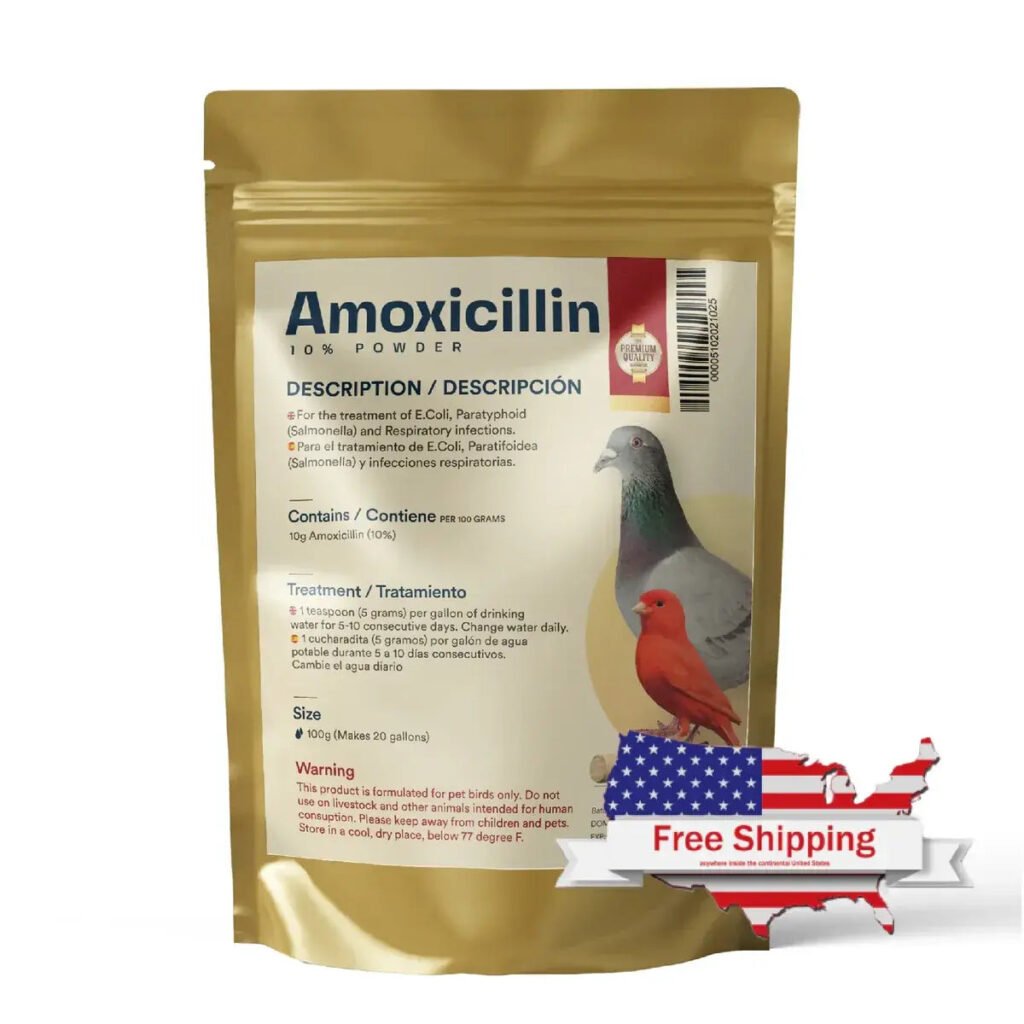
Amoxicillin 10% Powder for Birds – Broad-Spectrum Support for Pigeons & Pet Birds – 100 g
$39.99 -

Amoxicillin 25% Powder – Broad-Spectrum Generic Treatment for Paratyphoid, E. Coli & Respiratory Infections
$54.00 -
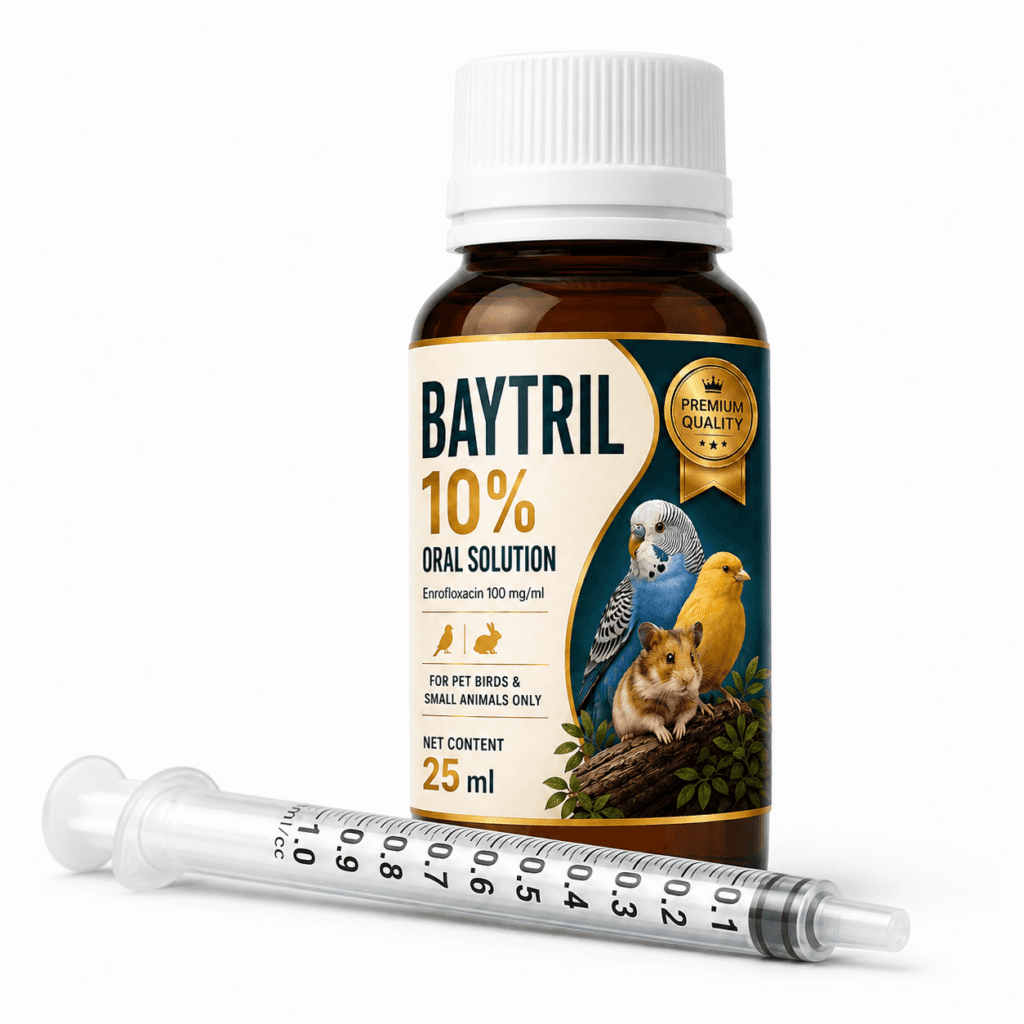
Baytril 10% Oral Solution for Pet Birds & Small Animals – Enrofloxacin 100 mg/mL – 25 mL
$46.95 -
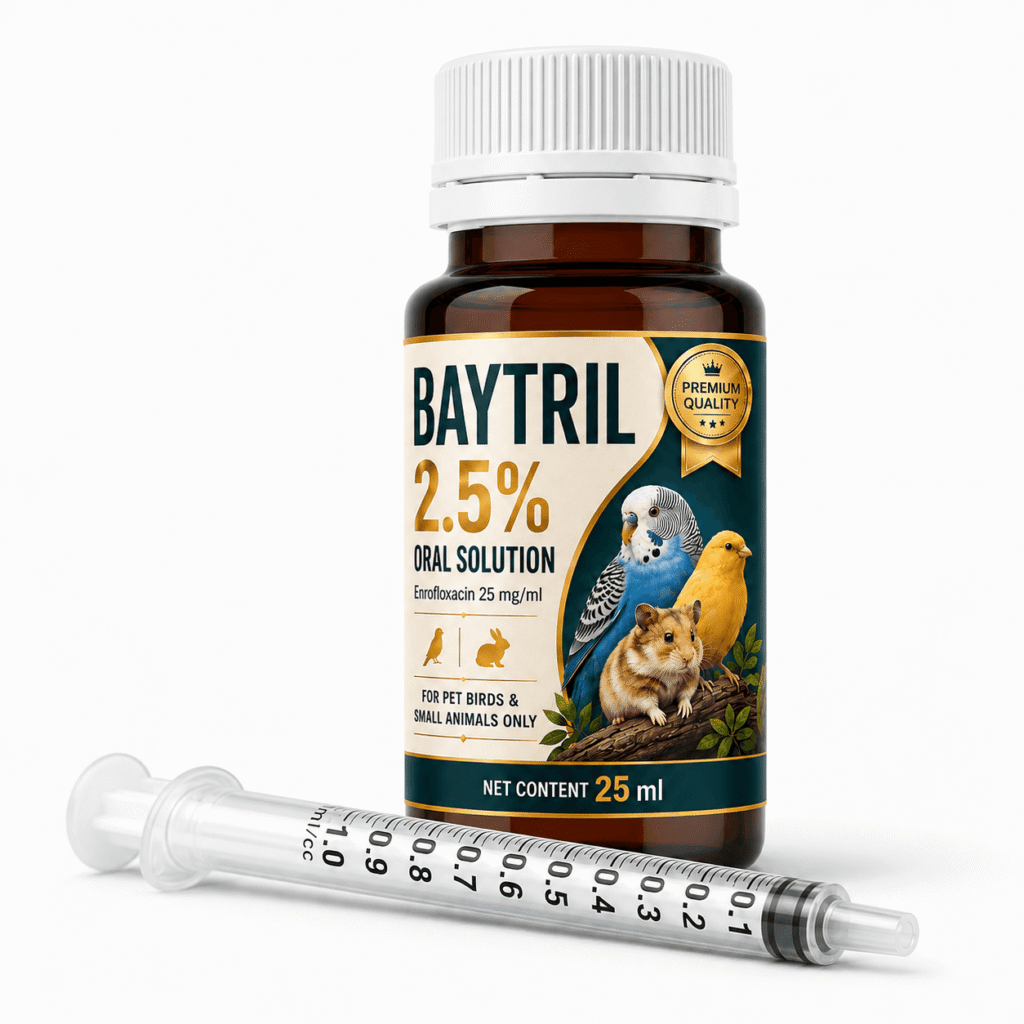
Baytril 2.5% Oral Solution for Pet Birds & Small Animals – Enrofloxacin 25 mg/mL – 25 mL
$39.95 -
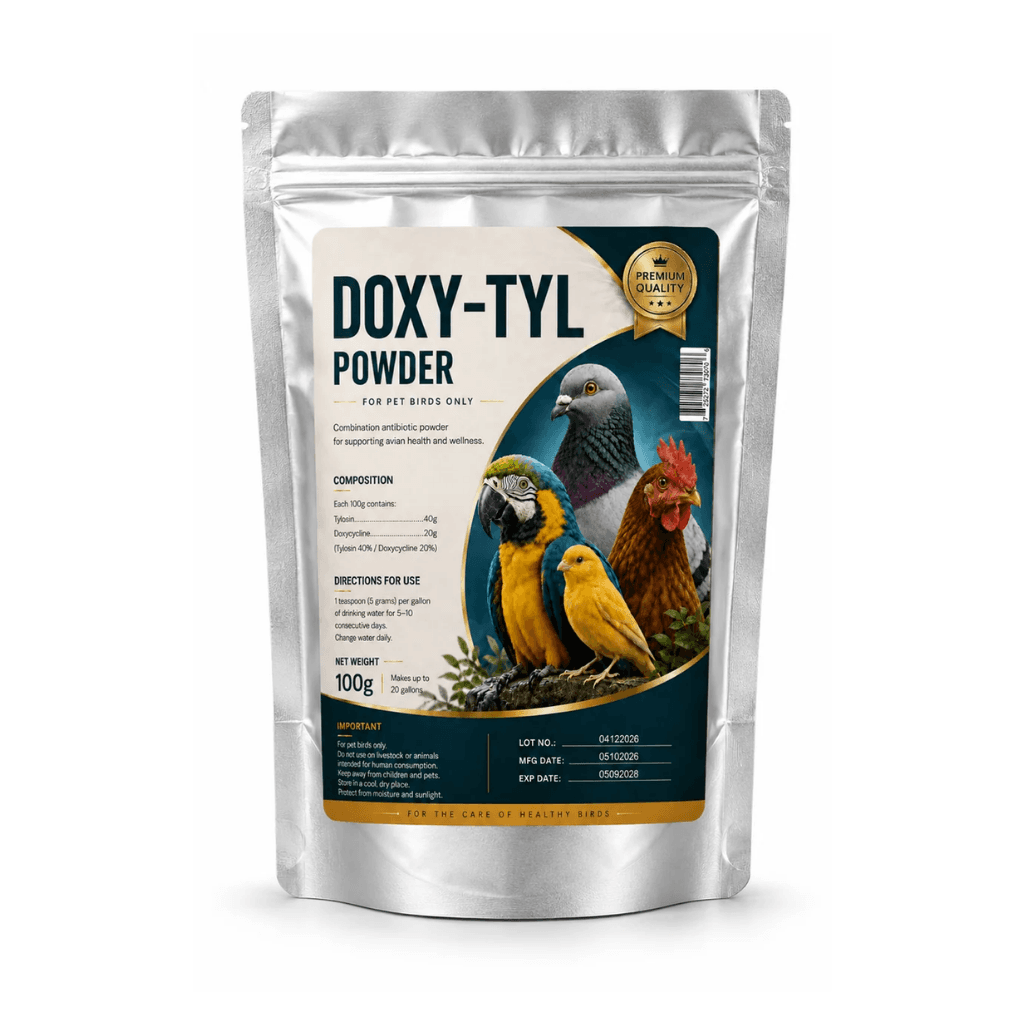
Doxy-Tyl Powder for Pet Birds – Tylosin & Doxycycline Avian Antibiotic Powder 100g
$49.95 -
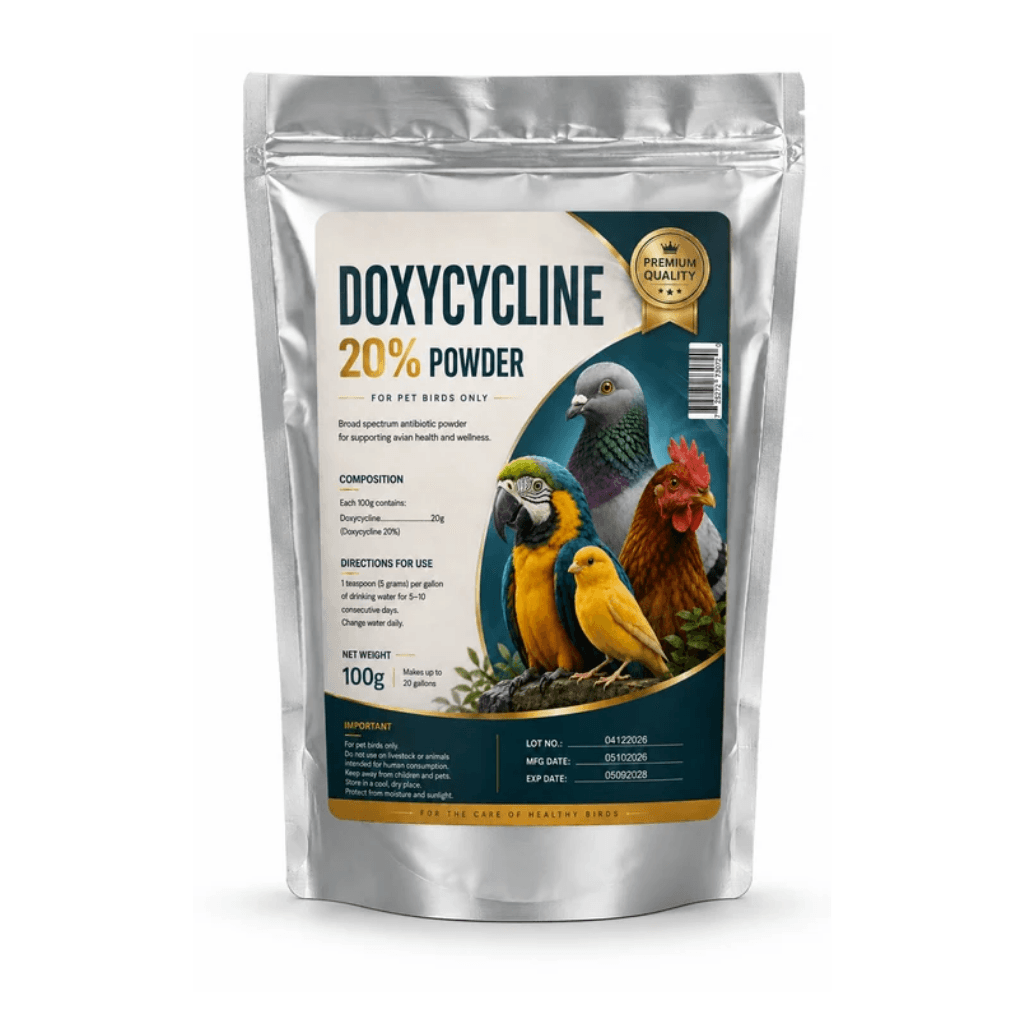
Doxycycline 20% Powder for Pet Birds – Avian Antibiotic Powder 100g
$39.95 -
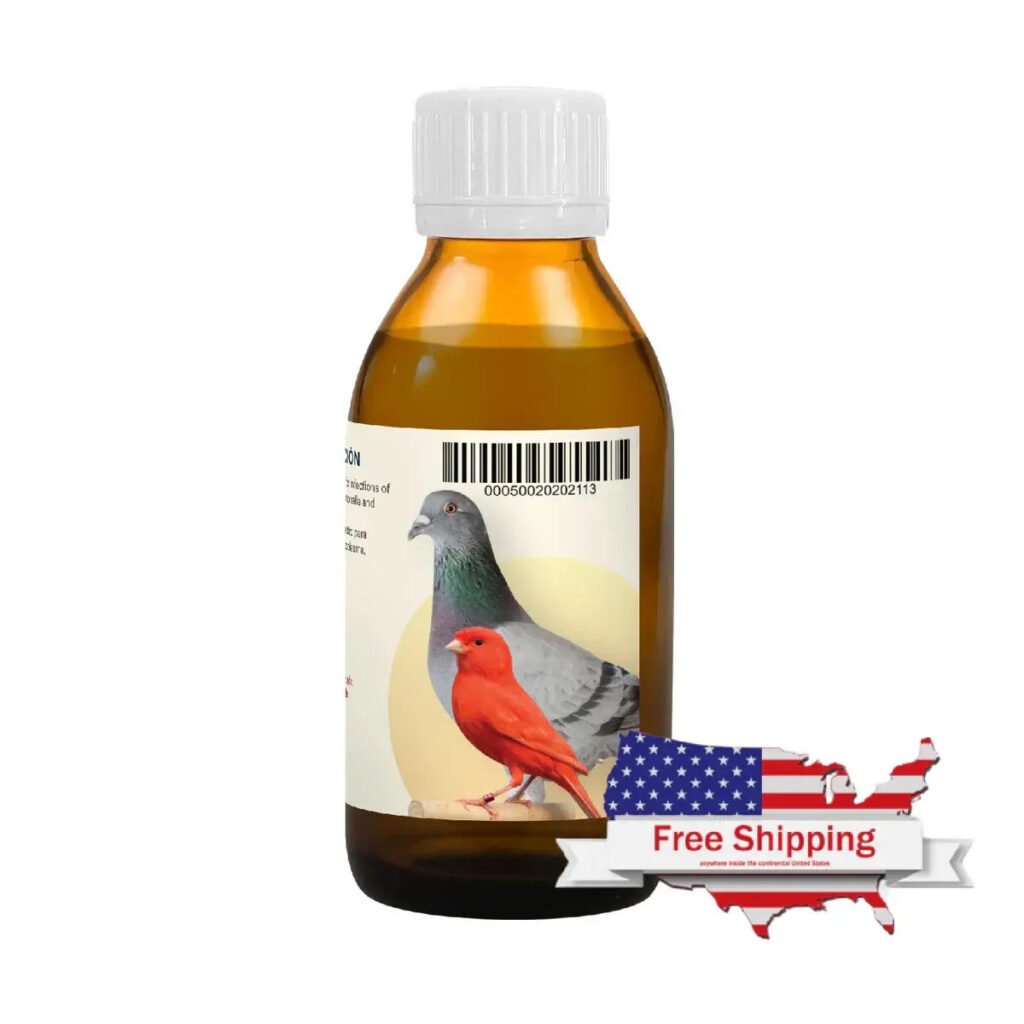
Enrofloxacin 10% Oral Solution for Birds – Broad-Spectrum Support – 100 ml
$59.95 -
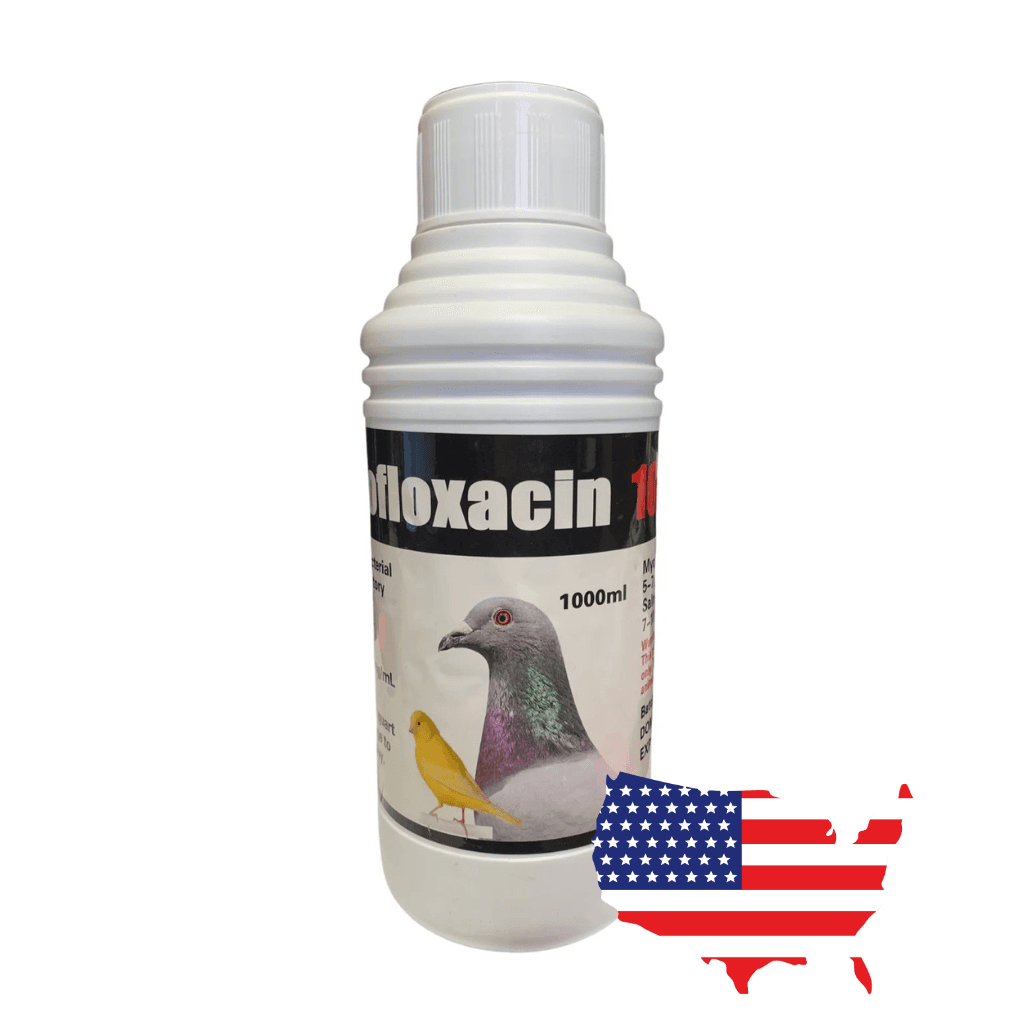
Enrofloxacin 10% Oral Solution for Birds – Broad-Spectrum Support – 1000 ml
$259.95 -
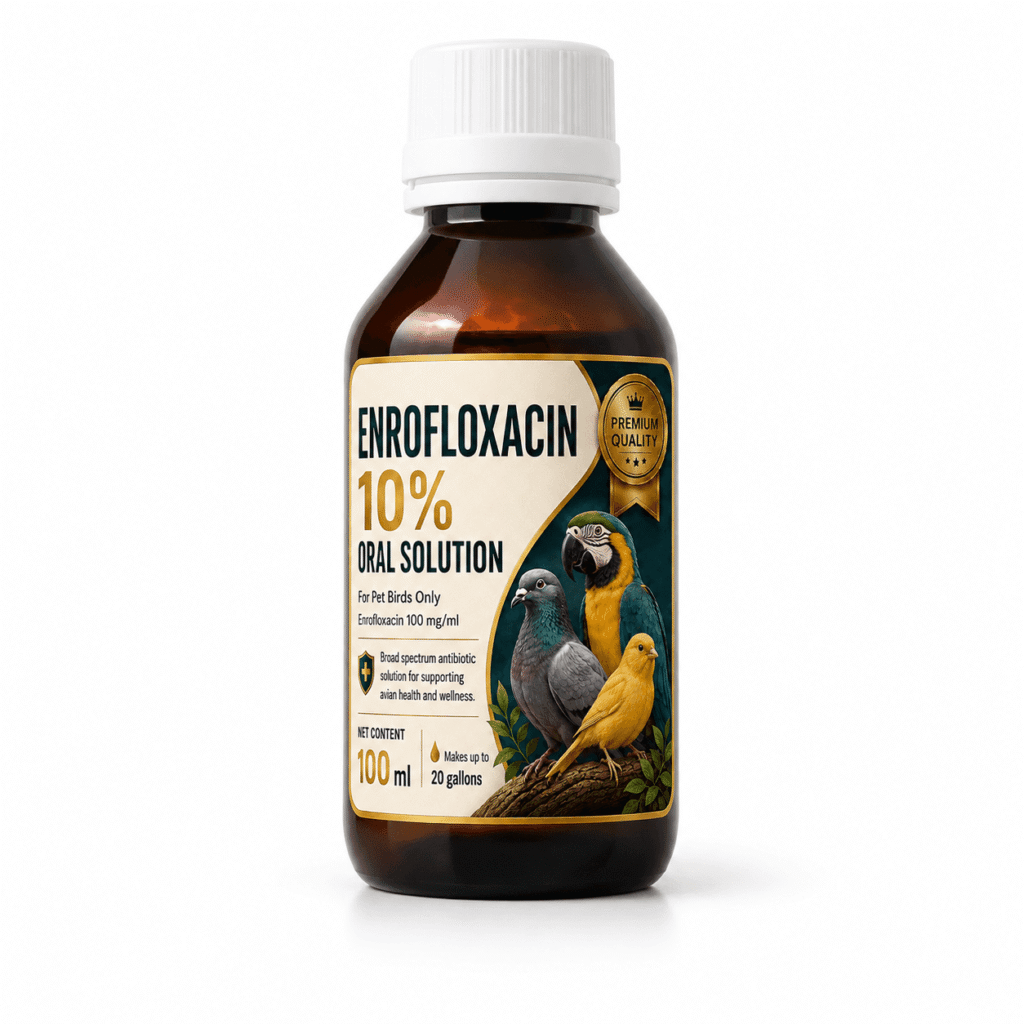
Enrofloxacin 10% Oral Solution for Pet Birds – 100 mg/mL Avian Antibiotic – 100 mL
$42.29 -
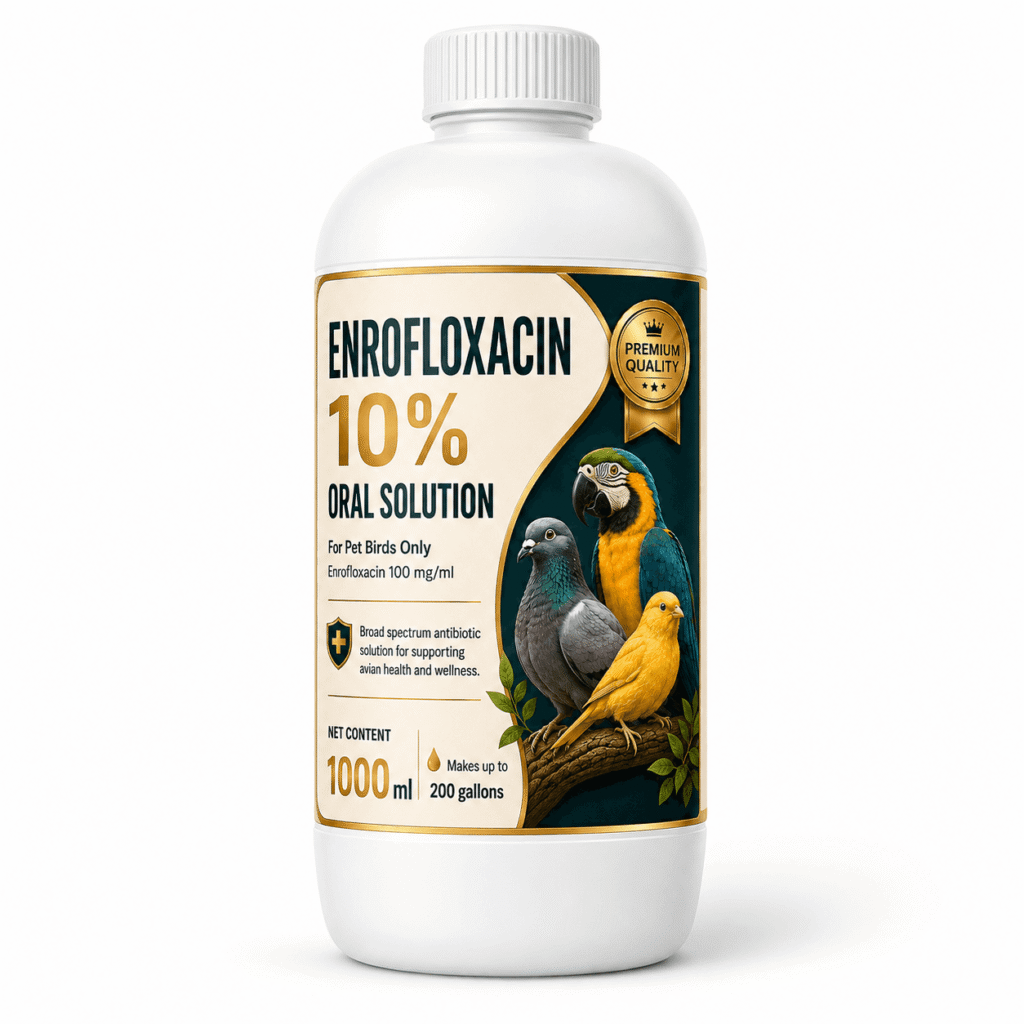
Enrofloxacin 10% Oral Solution for Pet Birds – 100 mg/mL Avian Antibiotic – 1000 mL
$239.95 -
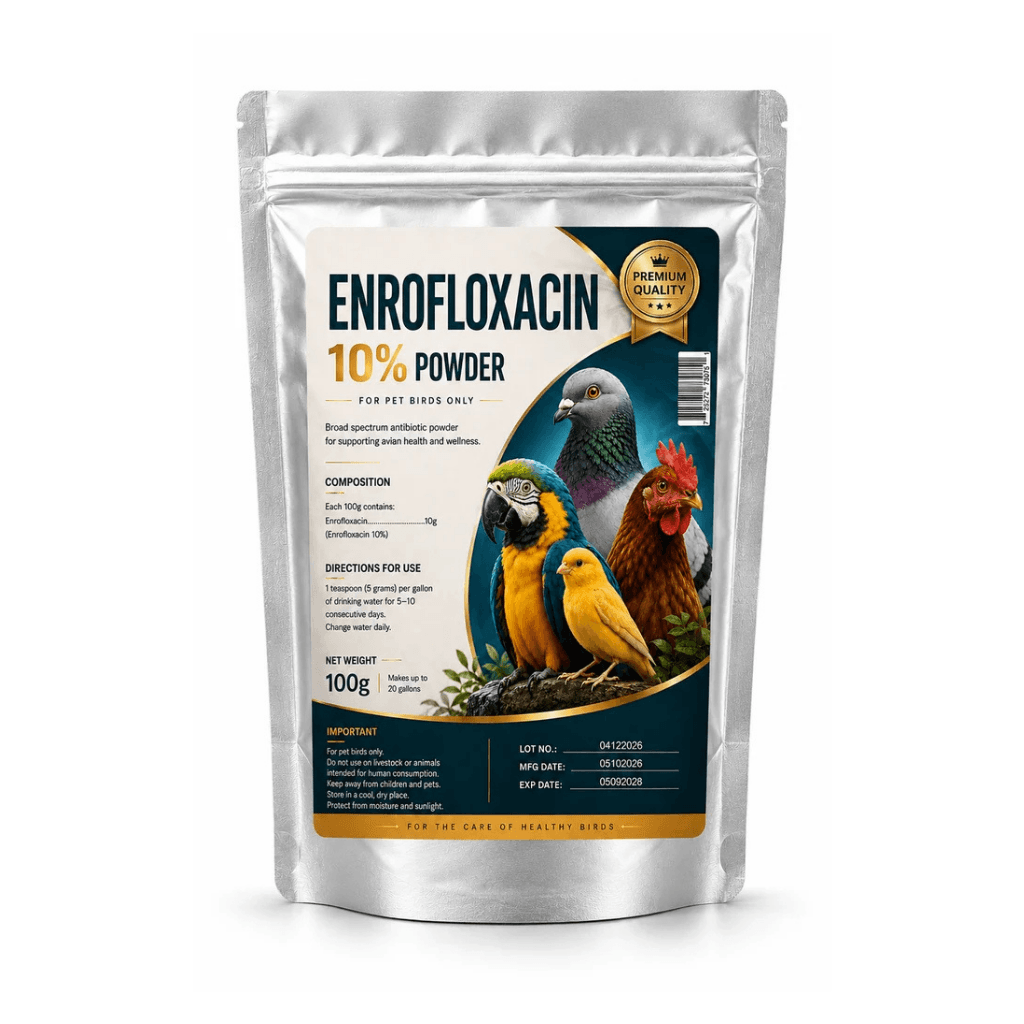
Enrofloxacin 10% Powder for Pet Birds – Avian Antibiotic Powder 100g
$39.95 -
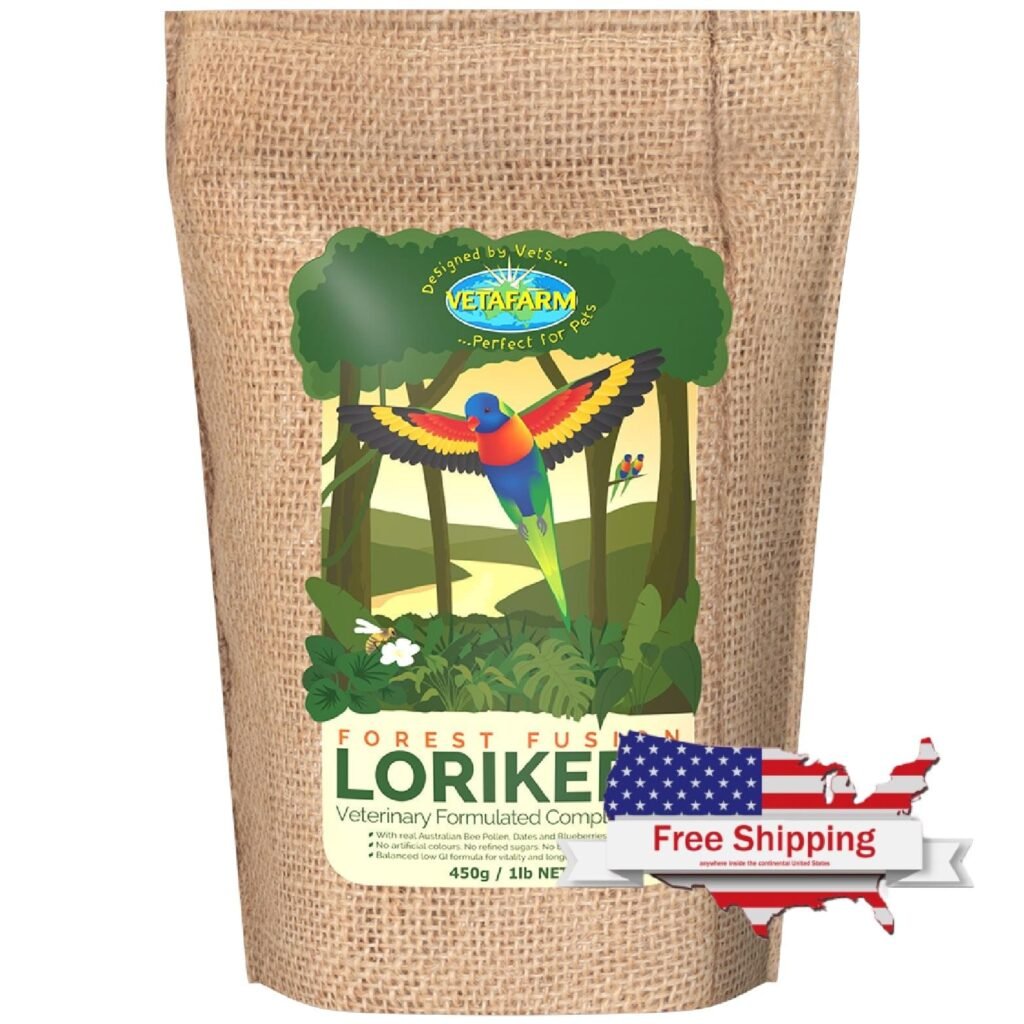
Forest Fusion Lorikeet (Vetafarm) Premium Lorikeet Food
Price range: $52.95 through $59.95 -
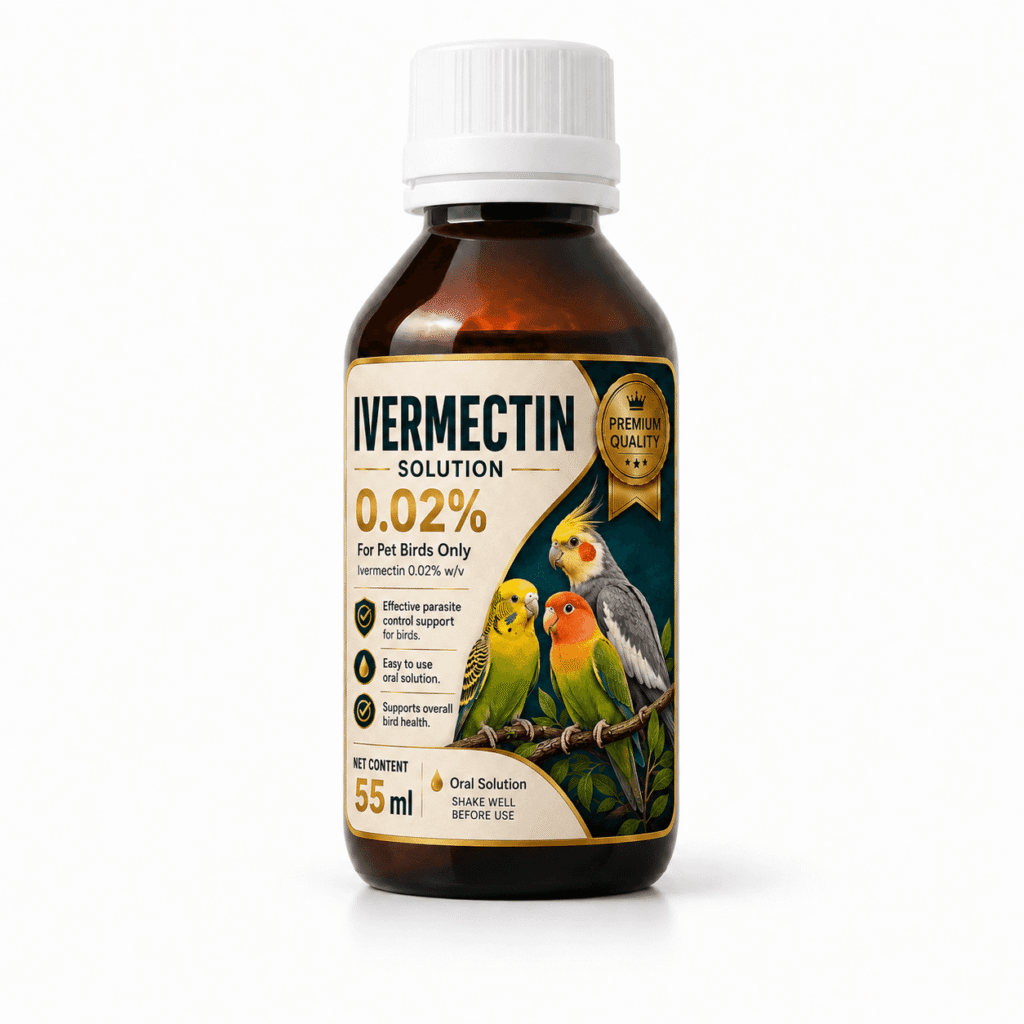
Ivermectin 0.02% Oral Solution for Pet Birds – Avian Parasite & Mite Control Support – 55 mL
$39.55 -
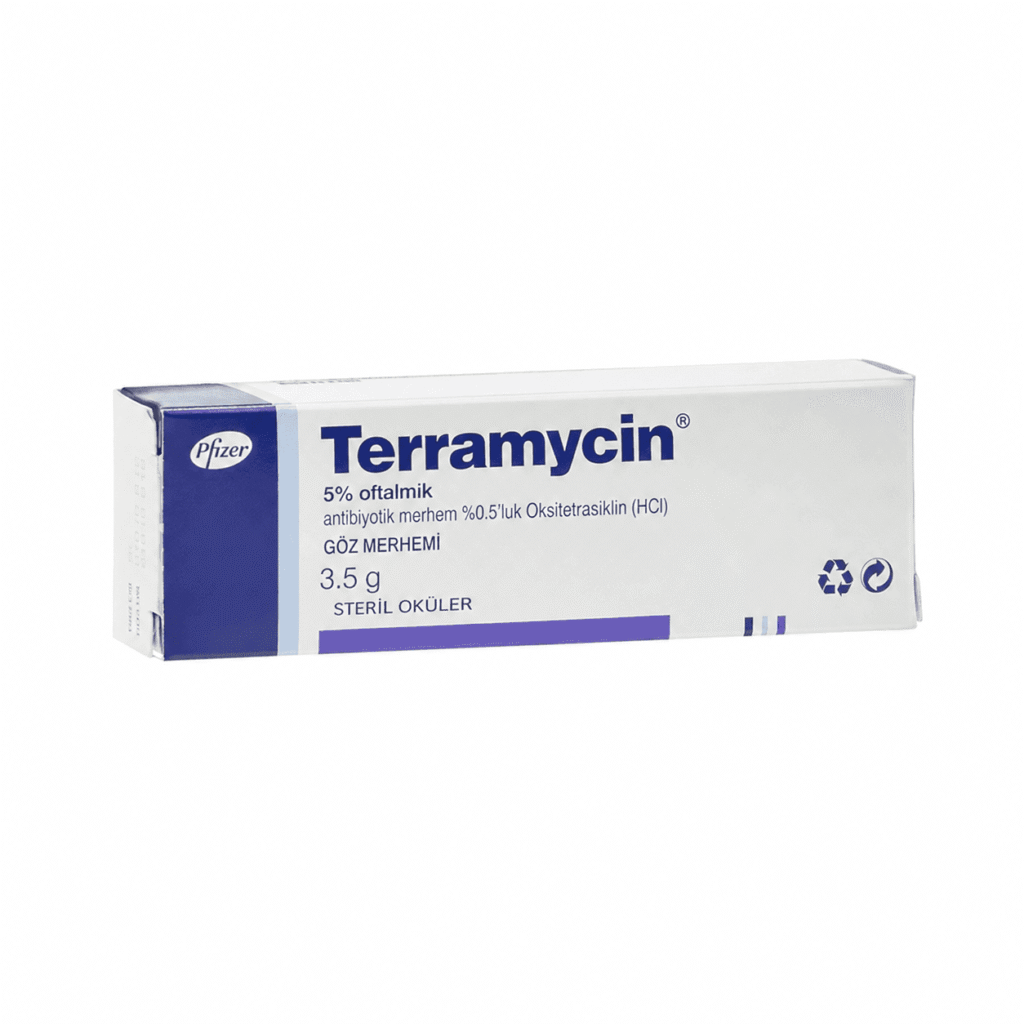
Terramycin Ophthalmic Ointment – Broad-Spectrum Eye Infection Treatment for Birds & Pets
$49.95
Explore bird antibiotics by ingredient
When you are looking for a particular bird antibiotic, the active ingredient is the best place to start. A brand name may help you recognize a package, but the full ingredient line gives you a more precise way to identify it. The same ingredient can appear in different concentrations or forms, so keep those details together when comparing listings.
This category includes enrofloxacin liquids and powder, amoxicillin powders, doxycycline powder, and a doxycycline-and-tylosin combination. It also contains other bird care products. Use the listing names and descriptions to distinguish the products before comparing price or package size.
Enrofloxacin oral solutions and powder
Enrofloxacin appears in several listings, including Baytril oral solutions. The Baytril 2.5% oral solution listing describes a 25 mL bottle at 25 mg/mL. The Baytril 10% oral solution listing also describes a 25 mL bottle, with a stated concentration of 100 mg/mL.
Those matching bottle sizes make a useful comparison. Both hold 25 mL of liquid, while their listed concentrations differ. If your veterinarian has specified a preparation, check every part of its description, including the ingredient, concentration, and form.
The category also includes enrofloxacin oral solution listings in 100 mL and 1,000 mL bottles, plus an enrofloxacin powder. A powder percentage and a liquid concentration use different units. Keep the full formulation in view when discussing a product with your veterinarian.
Amoxicillin powders for birds
The amoxicillin 10% powder listing and the amoxicillin 25% powder listing identify different stated strengths. Both names contain amoxicillin, so the percentage is an important part of identifying the preparation.
Check the package weight separately. A figure such as 100 g describes the amount of packaged powder when it is given as the net weight. It does not mean the container holds 100 g of pure active ingredient. If the concentration or ingredient line on your bottle is unclear, take a legible photograph before asking for help.
Doxycycline, tylosin, and combination powders
The doxycycline 20% powder listing identifies doxycycline in powder form. The Doxy-Tyl powder listing names two ingredients, doxycycline and tylosin. A separate tylosin powder also appears in the category.
When you are matching a product name to veterinary instructions, include the complete name. “Doxycycline” and “Doxy-Tyl” describe different formulations. A combination product needs its own assessment, even when one of its ingredients sounds familiar. Share a picture of the ingredient panel if the abbreviated name is all you have.
How to compare bird antibiotic strengths and package sizes
The numbers on a product listing answer different questions. Concentration describes how much ingredient is declared in a particular quantity of product. Package size tells you how much product the container holds. Reading the unit after each number helps you keep the two separate.
| Label wording | What it describes | What to check alongside it |
|---|---|---|
| 25 mg/mL | The stated amount of ingredient in each milliliter of liquid | Ingredient name and dosage form |
| 100 mg/mL | A different stated liquid concentration | The concentration specified in the veterinary instructions |
| 25 mL, 100 mL, or 1,000 mL | Total liquid volume in the bottle | Concentration and exact product identity |
| 10%, 20%, or 25% on a powder listing | The stated strength of that preparation | Full ingredient panel and how the label expresses the percentage |
| 100 g net weight | Total weight of the packaged powder | Ingredient concentration and storage instructions |
For example, two enrofloxacin liquids may both be listed at 100 mg/mL while one comes in a 100 mL bottle and the other in a 1,000 mL bottle. In that comparison, the stated concentration matches and the volume differs. If you are comparing two 25 mL bottles at 25 mg/mL and 100 mg/mL, the volume matches and the concentration differs.
These are label comparisons. They cannot establish the treatment amount for an individual bird. Keep your veterinarian’s instructions with the exact preparation they refer to, especially when a refill or a different package looks similar.
What to check before comparing package prices
Choose two listings with the same ingredient, stated concentration, and form before comparing their package sizes. Price per bottle can be misleading when one bottle has a different concentration or one listing contains more than one ingredient. Keep any separate shipping cost in mind when reviewing the order total.
A simple product record can help you return to the same preparation later. Copy the following details from the listing and confirm them against the package when it arrives.
- The full product name, including any brand or combination name.
- Every active ingredient named in the preparation.
- The stated strength with its units, such as mg/mL or a powder percentage.
- The form, such as oral solution or powder.
- The bottle volume or package net weight.
If the listing and the package appear to differ, keep both records and ask for clarification. This gives the store a specific discrepancy to investigate and gives the clinic a clear product identity to work with.
Oral solutions and powders for pet birds
An oral solution is presented as a liquid. A powder is presented as a dry preparation. The form matters when you are identifying a product because veterinary instructions apply to a particular formulation and route of administration.
Before comparing prices, check whether you are looking at two liquids, two powders, or different forms of the same ingredient. For liquids, read both mg/mL and bottle volume. For powders, read the stated strength and net weight. If one listing uses a percentage and another uses milligrams, preserve those units when asking the clinic to identify the correct preparation.
Keep a small record of the product name, ingredient, strength, form, and package size you discussed. That record is particularly helpful when several people care for a bird or when you return later to locate the same listing.
Comparing listings for parrots, budgies, cockatiels, and pigeons
Owners of different birds may search using the same phrase, such as “antibiotics for pet birds.” That broad search can bring together products whose labels mention different species or settings. The words in a product title are a starting point for identifying it. The full label and your veterinarian’s assessment determine what information applies to your bird.
If you keep a budgie, cockatiel, parrot, canary, finch, or pigeon, give the clinic the species when asking about a medicine. Also mention whether the bird lives alone, shares a cage, or belongs to a larger aviary. Shared food and water can make it harder to tell how much an individual bird consumes.
When more than one bird lives in the same enclosure, describe each bird separately. A note such as “one of three cockatiels has eaten less since yesterday” gives the clinic a clearer history than a general statement about the whole cage. Include any recent arrival or change in routine.
When an avian veterinarian may consider antibiotics
Antibiotics can be part of treatment for a bacterial infection. A change in appetite, droppings, or breathing does not identify the cause on its own. An avian veterinarian considers the bird’s history and examination findings and may recommend testing before choosing a medicine.
You may hear the terms culture and susceptibility testing. A culture helps identify bacteria from a sample, while susceptibility testing helps show which antibiotics inhibit them in the laboratory. The veterinarian interprets those results in the context of the bird and the affected part of its body. Merck Veterinary Manual on bacterial diseases of pet birds
If your bird is already unwell, write down when the first change appeared, what it has eaten, and anything it has already received. For open-mouth breathing at rest, labored breathing with tail bobbing, or collapse, contact a clinic that treats birds immediately. Avian emergency guidance
Other bird care products in this category
The product grid also includes items for other aspects of bird care, including ivermectin listings for parasite control, an ophthalmic ointment, and Forest Fusion Lorikeet food. Their presence in the same category reflects how the catalog is organized. Read the individual product type and ingredient information as you browse.
If you are looking for the name written on a package, use the entire name in your search. If you are looking for help with a sick bird, contact an avian veterinarian and describe the signs you have observed. Those two starting points help you decide whether you need a catalog detail or a clinical assessment.
Frequently asked questions about bird antibiotics
What should I compare when browsing bird antibiotics?
Compare the full ingredient name, concentration, form, and package size. Include every ingredient in a combination preparation. If you are matching a prescription or veterinary instruction, keep that instruction beside the product details and ask the clinic about any difference before using the preparation.
Is Baytril the same name as enrofloxacin?
Baytril is a brand name used in the category’s enrofloxacin oral solution listings. Read the concentration as well as the brand. The listed 2.5% and 10% solutions have different strengths, even where the bottles hold the same volume. Other enrofloxacin listings need their own label check.
Does a larger bottle contain a stronger bird antibiotic?
Bottle size alone cannot tell you the concentration. A 1,000 mL bottle and a 100 mL bottle can have the same stated mg/mL. Compare concentration separately from total volume, and check the complete product identity when locating the preparation specified by your veterinarian.
Can I add a bird antibiotic to drinking water?
Use the administration method your veterinarian specifies. Birds may consume different amounts of food or water, and a shared bowl makes individual intake difficult to measure. Tell the clinic if the bird is eating or drinking less or if you cannot give the medicine as directed. Merck Veterinary Manual on giving medicine to pet birds
How do I find the right product information for my bird?
Have the species, exact product name, ingredient, and stated concentration ready when speaking with your avian veterinarian. A clear photograph of the front and back of the package can resolve an ambiguous name or unit. For a question about a listing or an order from this store, contact Fish Amoxicillin.
How should I check storage and expiration details?
Read the instructions on the actual package and any directions supplied by the dispensing clinic. Match the expiration date to the bottle in hand. If the date or lot number is missing or unreadable, ask for clarification before using it. Keep the original label available so the product can be identified accurately.
Review the full listing before choosing a package
Browse the bird antibiotic listings above to compare ingredients, liquid concentrations, powder strengths, and package sizes. Open the relevant product page and match its details with the preparation discussed with your avian veterinarian. If the listing leaves a packaging question unanswered, contact our team with the exact product name so we can help identify the information you need.